
Crimes Without Courts: Why Justice for Yazidi Women Remains Unfinished
2/7/2026
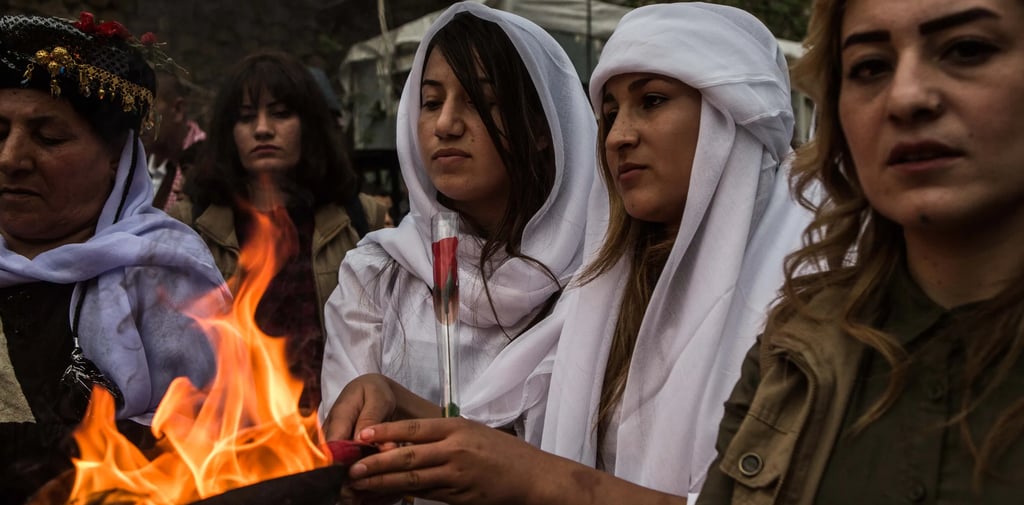
The report examines the continuing failure to deliver comprehensive accountability for crimes committed by ISIL/Da’esh against Yazidi women and children. It draws on WeCare Foundation’s recent legal interview on Yazidi accountability and expands that discussion into a broader policy and human rights analysis. The report sets out the legal, institutional, and survivor-centred dimensions of the accountability gap, and advances WeCare Foundation’s position that justice for Yazidi women must move beyond commemoration, fragmented prosecutions, and narrow terrorism charges.
More than a decade after ISIL/Da’esh attacked the Yazidi people in Sinjar and surrounding areas, the legal case for accountability is clear. The campaign against the Yazidis has been recognised by international bodies as genocide. Women and girls were captured, sold, enslaved, raped, forcibly transferred, and subjected to a system of organised abuse that was not incidental to ISIL’s project but central to it.
WeCare Foundation’s position is that justice for Yazidi women cannot be reduced to symbolic recognition or occasional individual convictions. The crimes committed require legal recognition as genocide, crimes against humanity, war crimes, sexual slavery, and enforced disappearance. They require courts and mechanisms capable of naming the full nature of the harm, protecting survivors, and delivering judgments that reflect the organised and systematic character of the atrocity.
This report places WeCare Foundation at the centre of that accountability conversation. It builds on our recent interview with the Kurdish Rights Centre and consolidates the key legal, institutional, and survivor-centred issues into a public-facing report. External organisations and mechanisms are treated as interview partners, institutional sources, or reference bodies. The legal position and recommendations are presented as WeCare Foundation’s own advocacy framework.
The central accountability gap remains jurisdictional. Iraq and Syria are not presently State Parties to the Rome Statute, and the Security Council route has remained politically blocked. UNITAD gathered and preserved important evidence, but its mandate ended in September 2024 and it never possessed prosecutorial authority. National universal-jurisdiction prosecutions have delivered important breakthroughs, particularly in Germany, but they remain fragmented and case-specific. A dedicated international or hybrid tribunal remains the most coherent route to systematic accountability for ISIL crimes against Yazidi women and children.
The Atrocity: What Happened to Yazidi Women and Girls
The crimes committed by ISIL against Yazidi women were deliberate, organised, and ideological. Women and girls were separated from men and boys after the attacks on Sinjar, transported between locations, registered, bought and sold, and subjected to sexual slavery and forced marriage. The violence was not simply the consequence of battlefield collapse or opportunistic abuse. It reflected a system of captivity and exploitation embedded within ISIL’s governance, propaganda, and religious claims.
WeCare Foundation’s analysis begins from the reality that the targeted abuse of Yazidi women was used as a method of destroying the Yazidi community as a religious group. Sexual violence was used as a weapon of domination. Forced pregnancy, forced conversion, forced marriage, trafficking, and family separation were used to attack lineage, identity, and communal continuity. These patterns are central to why the crimes must be understood not only as sexual violence, but as genocide and crimes against humanity.
International documentation has repeatedly described how Yazidi women and girls were treated as property, exchanged through formal and informal markets, and moved across Iraq and Syria. Survivors have reported being sold multiple times, threatened with death if they resisted, and forced to live under assumed identities. Children born of rape, children forcibly removed from families, and boys subjected to forced indoctrination and military training form part of the same criminal architecture.
For WeCare Foundation, legal characterisation matters because naming the crime shapes the remedy. A terrorism conviction may punish an individual perpetrator, but it does not necessarily recognise the gendered, genocidal, and communal dimensions of what was done. Yazidi survivors deserve legal processes that describe the crime fully, accurately, and publicly.
Legal Characterisation: Genocide, Crimes Against Humanity and War Crimes
The Genocide Convention defines genocide as certain prohibited acts committed with intent to destroy, in whole or in part, a national, ethnical, racial, or religious group. The Yazidis fall within the protected categories as a religious group. ISIL’s conduct included killings, serious bodily and mental harm, measures that disrupted family and community life, and acts directed at the destruction of Yazidi identity and continuity.
The Rome Statute provides a broader criminal framework. It recognises genocide, crimes against humanity, and war crimes as core international crimes. In the Yazidi context, relevant categories include enslavement, sexual slavery, rape, forced pregnancy, persecution, imprisonment, torture, enforced disappearance, and other inhumane acts. These categories do not compete with one another. They describe different legal dimensions of the same overall campaign.
WeCare Foundation’s position is that any adequate accountability framework must hold these categories together. It must not treat sexual slavery as a collateral harm, nor genocide as a symbolic label detached from prosecution. A full legal approach must show how gender-based violence, forced religious erasure, family separation, forced conversion, and enforced disappearance formed part of one organised system.
The legal record is unusually strong. The evidence base includes survivor testimony, ISIL documents, digital material, forensic evidence, mass grave investigations, and structured case files prepared by accountability mechanisms. The challenge is therefore not primarily legal uncertainty. It is the absence of a forum with sufficient jurisdiction, resources, political support, and survivor-centred procedures.
Evidence and the UNITAD Legacy
UNITAD was established by the United Nations Security Council in 2017 to support domestic efforts to hold ISIL accountable by collecting, preserving, and storing evidence in Iraq of acts that may amount to war crimes, crimes against humanity, and genocide. Its creation recognised a practical problem: the evidence was dispersed, fragile, and at risk of disappearing, while there was no international court with general jurisdiction over ISIL crimes committed in Iraq.
WeCare Foundation views UNITAD as an important but incomplete innovation. Its work helped transform survivor testimony and field documentation into evidentiary material capable of supporting prosecutions. It also supported mass-grave investigations, digital evidence preservation, and cooperation with national authorities. However, UNITAD was not a court and did not possess prosecutorial authority. Its value depended on whether national jurisdictions could use the evidence lawfully, fairly, and effectively.
UNITAD’s mandate concluded in September 2024. That closure increases the urgency of preserving access to the evidence and ensuring that material gathered through years of investigative work does not become dormant. Evidence without prosecutions is not justice. Documentation without a pathway to court can become an archive of institutional failure.
WeCare Foundation therefore calls for a post-UNITAD evidence strategy based on secure preservation, survivor-informed access rules, cooperation with credible national prosecutors, and a mechanism capable of converting the record into systematic charges. The end of UNITAD should not be allowed to mark the end of international responsibility.
The Jurisdictional Gap
The most serious obstacle to accountability is not the absence of law, but the absence of jurisdiction. Iraq and Syria are not presently State Parties to the Rome Statute. This means that the International Criminal Court cannot simply exercise general territorial jurisdiction over ISIL crimes committed on Iraqi or Syrian territory. A Security Council referral could have created a pathway, but geopolitical deadlock has prevented a comprehensive referral for Syria-related atrocities.
This creates a familiar contradiction in international criminal law. The crimes most in need of international adjudication are often committed in places where treaty jurisdiction is limited, domestic courts are strained, and Security Council politics are paralysing. Survivors are then left with a patchwork of partial options: national terrorism trials, occasional universal-jurisdiction cases abroad, civil claims, immigration-related proceedings, or no proceeding at all.
For Yazidi women, this gap is especially harmful. Many perpetrators moved across borders. Some returned to countries of nationality. Some remain missing, detained, or untried in Iraq and Syria. Some victims have resettled abroad, while others remain displaced in the region. A justice model that depends on suspects being physically present in one of a limited number of willing states will inevitably remain incomplete.
WeCare Foundation’s position is that jurisdictional fragmentation should not be treated as a technical inconvenience. It is the central structural reason why accountability remains fragile. Any serious policy response must begin by asking where these crimes can be prosecuted as the crimes they were, rather than forcing survivors into whichever narrow legal forum happens to be available.
Universal Jurisdiction: Important but Insufficient
Universal jurisdiction has produced some of the most important accountability breakthroughs for Yazidi victims. Germany, in particular, has pursued cases under its international criminal law framework. The Frankfurt Higher Regional Court’s conviction of Taha Al-J. for genocide, crimes against humanity, and war crimes marked a landmark moment. A domestic court recognised the genocidal character of ISIL crimes against the Yazidis and imposed a life sentence.
These cases matter. They show that national courts can apply international criminal law to atrocity crimes committed abroad. They create authoritative legal records, allow survivors to testify, and demonstrate that perpetrators who travel outside the conflict zone may still face justice. Universal jurisdiction is therefore an essential part of the accountability ecosystem.
However, it cannot be the entire system. Universal-jurisdiction cases are complex, costly, and dependent on prosecutorial capacity in individual states. They often require the suspect’s presence in the prosecuting country. They proceed one case at a time, which means they cannot easily address the scale of ISIL’s network of perpetrators, facilitators, recruiters, traffickers, and commanders.
WeCare Foundation supports universal-jurisdiction prosecutions while insisting that they are not a substitute for a dedicated accountability process. A limited number of landmark convictions cannot carry the moral or legal weight of thousands of victims. The future model must combine national prosecutions with a larger institutional architecture capable of pursuing systematic accountability.
Why Terrorism Prosecutions Are Not Enough
Many ISIL members have been prosecuted under terrorism laws. These prosecutions can be legitimate and necessary, particularly where states seek to punish membership, support, recruitment, financing, or participation in a terrorist organisation. However, terrorism law alone is inadequate for Yazidi survivors when it fails to name genocide, sexual slavery, forced marriage, enslavement, persecution, and enforced disappearance.
A terrorism conviction may establish that a defendant belonged to ISIL, but it may not establish what was done to a specific Yazidi woman, why the Yazidi community was targeted, how the sexual enslavement system operated, or how the crimes fit into a broader genocidal plan. When prosecutions flatten genocide into terrorism, victims lose legal recognition of the specific harm done to them.
This matters for history, reparations, survivor dignity, and non-recurrence. Court judgments are not only punishments. They are public records. They tell survivors whether the law has understood their suffering. They tell future perpetrators whether targeted sexual slavery can be hidden behind generic security charges. They tell communities whether the destruction of identity is visible to legal institutions.
WeCare Foundation therefore calls for international-crimes charging wherever evidence supports it. States should review ISIL-related case files to determine whether charges for genocide, crimes against humanity, war crimes, trafficking, enslavement, and sexual violence are available. Where domestic laws lack those offences, legislative reform should be treated as urgent.
Survivor-Witness Protection
Accountability processes depend on survivor participation, but survivors must never be treated merely as sources of evidence. Yazidi women who testify about captivity, rape, forced marriage, forced conversion, family separation, or the disappearance of children face risks of retraumatisation, stigma, intimidation, and exhaustion. Legal systems that demand testimony without protection risk reproducing harm.
WeCare Foundation’s approach is survivor-centred and trauma-informed. Survivors should have access to legal representation, independent psychosocial support, confidential consultation before testimony, interpretation in a language they fully understand, and the option of female interviewers where preferred. Courts and investigators should avoid invasive questioning that places shame or suspicion on the survivor rather than on the perpetrator.
Protective measures must also recognise security realities. ISIL-affiliated networks, family and community pressure, online harassment, and the exposure of identifying details can all endanger survivors. Anonymity, closed sessions, voice or image distortion, relocation support, and careful media protocols may be necessary in particular cases.
Survivor participation should also be informed participation. Survivors need to know what their evidence will be used for, whether they may be cross-examined, what outcomes are realistically possible, and what support will continue after the proceeding ends. WeCare Foundation’s position is that justice must not extract testimony and then disappear. Accountability should leave survivors safer, not more exposed.
Missing Persons and the Continuing Duty to Search
Thousands of Yazidis were abducted during ISIL’s campaign. Civil society organisations have reported that thousands were taken, mainly women, girls, and boys, and that a large number remain missing. Save the Children has separately warned that about 1,300 Yazidi children remain missing ten years after the genocide. The uncertainty itself is a continuing harm for families who do not know whether loved ones are alive, dead, detained, trafficked, hidden, or living under assumed identities.
The duty to search does not expire with the news cycle. International human rights law and humanitarian principles recognise the right of families to know the fate of missing relatives. Mass grave excavation, DNA identification, documentation of captivity networks, tracing of children, and survivor-led community reporting must therefore remain central to the justice agenda.
WeCare Foundation emphasises that missing-persons work is not separate from accountability. It is evidence, remedy, and recognition at once. Identifying remains can support prosecutions, allow families to mourn, and confirm patterns of mass violence. Locating living survivors can reopen possibilities for reunification, rehabilitation, and testimony.
Funding and attention are fading while the need remains acute. Sinjar’s instability, competing authorities, unexploded ordnance, destroyed infrastructure, and continuing displacement all complicate the search. WeCare Foundation calls for a dedicated missing Yazidis mechanism supported by forensic experts, survivor organisations, national authorities, and international partners, with particular attention to children and women believed to remain alive in Syria or elsewhere.
Reparations and the Yazidi Survivors Law
Reparations are not charity. They are part of the legal response owed to victims of gross human rights violations and international crimes. Reparations may include compensation, rehabilitation, restitution, satisfaction, guarantees of non-recurrence, public acknowledgement, memorialisation, education, land and housing support, and access to medical and psychological care.
Iraq’s Yazidi Survivors Law, adopted in 2021, was an important recognition of the harm suffered by Yazidi women and other survivors of ISIL crimes. It created a domestic reparations framework that includes financial compensation and support measures. WeCare Foundation welcomes the law as an essential step, while also recognising the practical gap between legal adoption and accessible implementation.
Survivors frequently face bureaucratic barriers, documentation gaps, displacement, trauma, language barriers, and difficulties engaging with state institutions. A reparation system that exists on paper but is inaccessible to the most vulnerable survivors does not fulfil its purpose. Application processes must be simplified, decentralised, survivor-friendly, and accompanied by legal and psychosocial support.
WeCare Foundation also calls for an international reparations conversation. ISIL was a non-state armed group, but that cannot mean survivors are left without remedy. Frozen assets, state contributions, donor funds, and court-ordered compensation should be explored as part of a dedicated reparations mechanism. Reparations must be designed with Yazidi survivors, not merely for them.
The Case for a Dedicated Tribunal
WeCare Foundation supports the creation of a dedicated international or hybrid tribunal for ISIL crimes. Such a tribunal would not erase national prosecutions. It would organise them around a broader accountability strategy. It could be designed to prosecute senior perpetrators, representative cases, sexual and gender-based crimes, crimes against children, trafficking networks, and command structures across multiple jurisdictions.
A tribunal would address three problems at once. First, it would overcome the fragmentation of one-off national cases. Second, it would create a forum capable of charging crimes as genocide, crimes against humanity, and war crimes rather than defaulting to terrorism offences. Third, it would provide a structure for survivor participation, witness protection, evidence management, outreach, and reparations recommendations.
The legal groundwork already exists. UNITAD helped collect and organise evidence. National courts have shown that Yazidi genocide charges can be prosecuted. Survivor organisations have built years of documentation. The missing ingredient is political will.
WeCare Foundation’s tribunal proposal is therefore practical. States should convene a technical process to assess jurisdictional models, custody and transfer arrangements, evidence-sharing rules, survivor participation, funding, and the relationship between the tribunal and Iraqi courts. A hybrid model with meaningful Iraqi and Yazidi survivor participation may offer a route that is both internationally credible and locally connected.
WeCare Foundation’s Recommendations
WeCare Foundation’s recommendations are designed for states, international organisations, prosecutors, donor governments, and civil society partners. They are intentionally practical. The question is not whether the Yazidi genocide should be remembered, but how the existing record can be converted into justice, protection, and repair.
On jurisdiction, WeCare Foundation recommends that states begin formal consultations on an international or hybrid tribunal for ISIL crimes, including genocide and sexual slavery against Yazidi women and girls.
On domestic law, WeCare Foundation recommends support for Iraqi legal reform to incorporate genocide, crimes against humanity, and war crimes into domestic law with fair-trial safeguards.
On evidence, WeCare Foundation recommends that UNITAD-related evidence be preserved securely and that clear access pathways be created for credible prosecutions and survivor representatives.
On survivors, WeCare Foundation recommends the adoption of trauma-informed witness procedures, anonymity protections, psychosocial support, and survivor legal representation across all proceedings.
On missing persons, WeCare Foundation recommends the funding of a dedicated missing Yazidis mechanism with forensic, tracing, DNA, and child-protection capacity.
On reparations, WeCare Foundation recommends strengthening implementation of the Yazidi Survivors Law and exploring an international reparations fund for survivors of ISIL crimes.
These recommendations should be read together. A tribunal without survivor protection would be incomplete. Reparations without legal recognition would be insufficient. Evidence preservation without prosecutions would fail survivors. Domestic reform without resources would remain symbolic.
Conclusion
The Yazidi genocide is one of the clearest modern tests of whether international criminal law can move from recognition to enforcement. The facts have been documented. The legal categories are available. Survivors have testified. Evidence has been gathered. Yet justice remains partial, slow, and structurally fragmented.
WeCare Foundation’s conclusion is that the international community has entered the second stage of failure. The first failure was the inability to prevent the genocide. The second is the risk of allowing the documented record to remain without a systematic court capable of delivering accountability at scale. That second failure is still preventable.
Justice for Yazidi women requires more than memory. It requires a prosecutorial strategy, survivor protection, domestic legal reform, an international or hybrid tribunal, a missing-persons mechanism, and reparations that survivors can actually access. WeCare Foundation will continue to place these demands at the centre of its human rights work.
Selected linked sources and reference organisations include the UN Commission of Inquiry report, the OHCHR press release, UN Security Council Resolution 2379, the UNITAD conclusion statement, the Rome Statute, the Genocide Convention, ICC States Parties, the Yazidi Survivors Law background, the UNODC case law summary, the Yazda missing Yazidis report, the Save the Children missing children update, and the UK Security Council statement on UNITAD.
This report synthesises WeCare Foundation’s research on Yazidi accountability with publicly available legal and institutional sources. External organisations are identified as interview partners, institutional mechanisms, or reference organisations unless a formal partnership is separately confirmed.