
Russia Must Return All Ukrainian Children Deported Since 2022
6/21/2026
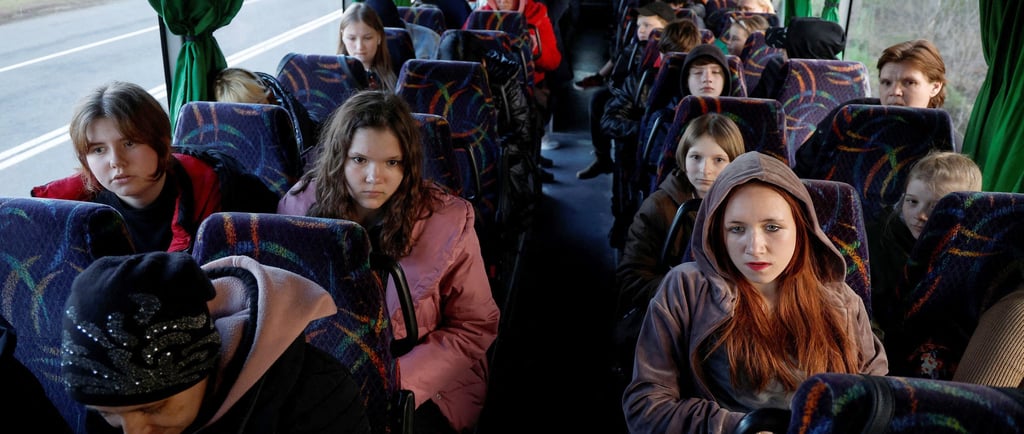
The Human Rights Association has called on the Russian Federation to immediately and unconditionally return all Ukrainian children unlawfully deported or forcibly transferred since the start of Russia’s full-scale invasion of Ukraine in February 2022.
According to the HRA’s review of documented cases, more than 20,500 Ukrainian children have been unlawfully deported or forcibly transferred to Russia and Russian-occupied territory since February 2022. Just over 2,300 children have been returned to Ukraine, leaving the fate and location of more than 18,000 children unknown or unresolved.
The HRA has also called on Russia to comply fully with the arrest warrants issued by the International Criminal Court against President Vladimir Putin and Children’s Rights Commissioner Maria Lvova-Belova, and to grant independent international monitors full access to all institutions and families currently holding Ukrainian children in Russia and Russian-occupied territory.
In March 2026, the Independent International Commission of Inquiry on Ukraine, reporting to the United Nations Human Rights Council, concluded that Russian authorities had committed the crimes against humanity of deportation, forcible transfer, and enforced disappearance of children. The Commission found that these acts were carried out pursuant to a policy conceived and executed at the highest level of the Russian Federation’s leadership.
The Commission also found that Russian authorities systematically granted Russian citizenship to deported children, placed them in long-term arrangements with Russian families or institutions, and listed their profiles on adoption databases instead of creating any effective system to facilitate their return to Ukraine.
One documented case reviewed by the HRA is that of Sasha, who was eleven years old when Russian forces took him from his mother while they were sheltering in a basement in Mariupol. He was told he would be given a Russian mother, a Russian passport, and a Russian name, before being sent to occupied Donetsk.
During a stop along the way, Sasha managed to borrow a stranger’s phone and call his grandmother, Liudmyla, who was living in unoccupied Ukraine. Liudmyla then travelled through Poland, Lithuania, Latvia, Russia, and finally into occupied Ukraine to bring him home.
Sasha’s case is one of the few successful returns. The HRA’s review finds that most returns have depended not on any system established by Russia, but on the determination of individual family members and the mediation of third states, including Qatar, South Africa, and the Vatican.
The HRA further states that Ukrainian children held in Russia and Russian-occupied territory have been subjected to systematic re-education and, in some documented cases, militarisation. Research has identified at least 210 facilities in Russia and Russian-occupied Ukraine where Ukrainian children have been held and subjected to programmes designed to erase their Ukrainian identity. Some documented cases also show children being placed into militarised training programmes upon reaching adolescence.
The European Council, representing twenty-five heads of state or government, reiterated in March 2026 its call for the immediate and unconditional return of all unlawfully deported and transferred Ukrainian children.
The HRA’s position is that the passage of time compounds the harm suffered by every child who remains unreturned. The obligation to secure their return must not be made dependent on the resolution of the wider conflict.
HRA Chairman Saad Kassis-Mohamed stated:
“Sasha was eleven years old when he was taken from his mother in a basement in Mariupol and told he would have a new name, a new mother, and a new country. He is one of the fortunate ones. His grandmother found a way to bring him home. More than eighteen thousand other Ukrainian children have not been so fortunate.”
He added:
“The United Nations has concluded that what Russia has done to these children amounts to a crime against humanity. The International Criminal Court has issued arrest warrants over it. None of that has been enough to bring these children home in the numbers that are required. The HRA calls on Russia to return every one of these children, and calls on the international community to ensure that the return of Ukraine’s children is treated as a non-negotiable condition of any path toward peace, not a footnote to it.”
The HRA is calling specifically on the Russian Federation to:
return immediately and unconditionally all Ukrainian children unlawfully deported or forcibly transferred since February 2022;
comply fully with the International Criminal Court arrest warrants issued against President Vladimir Putin and Children’s Rights Commissioner Maria Lvova-Belova;
dismantle the system of forced citizenship, adoption listing, and long-term placement currently applied to deported Ukrainian children;
cease all programmes of re-education and militarised training involving Ukrainian children held in Russia or Russian-occupied territory; and
grant independent international monitors full and unimpeded access to all facilities and families currently holding Ukrainian children.
The HRA further calls on the international community to ensure that the unconditional return of all deported Ukrainian children is treated as a non-negotiable requirement in any future negotiation concerning the conflict in Ukraine.