
Blue Justice: Protecting Oceans, Coasts, and Communities
12/7/2025
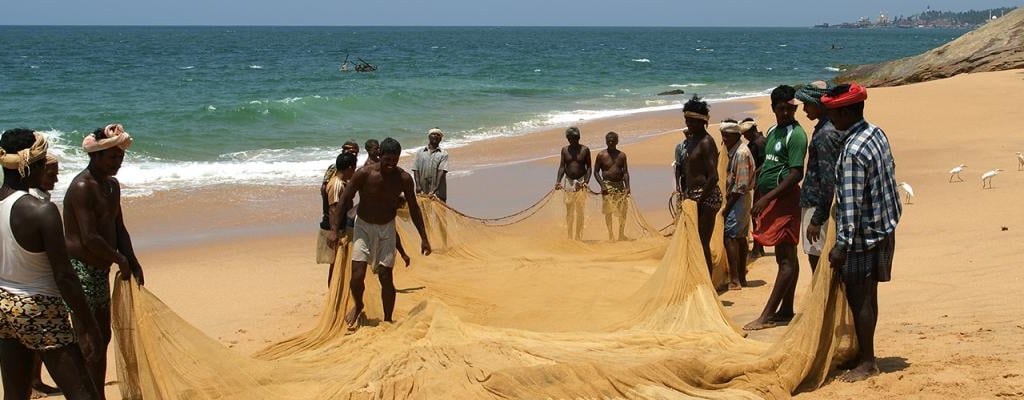
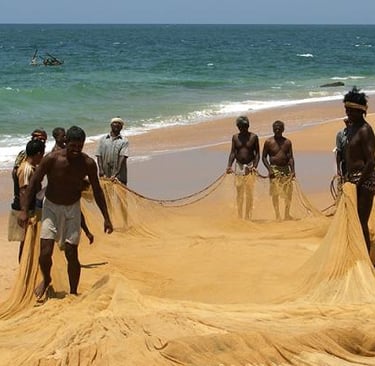
The world's oceans are a shared global commons, governed by the UN Convention on the Law of the Sea and a framework of international maritime law. Yet for the communities whose livelihoods, cultures, and food security depend on coastal and marine resources, these frameworks frequently fail to provide meaningful protection. Illegal fishing, industrial exploitation, coastal development, and marine pollution destroy the resource base on which coastal communities depend, without accountability and without remedy. The HRA's ocean and coastal rights mandate connects these harms to the human rights of the people who experience them.
What the HRA Addresses
The rights of artisanal and small-scale fishing communities whose livelihoods are destroyed by illegal,
unreported, and unregulated (IUU) fishing by industrial fleets, including those operating under flags
of convenience beyond effective national enforcement.
Forced labour and human trafficking aboard fishing vessels, including documented cases where
migrant workers are subjected to extreme exploitation at sea with no access to legal protection or
recourse.
The rights of island and coastal communities facing displacement or economic destruction through
marine protected area designations, coastal development projects, or industrial aquaculture that
excludes traditional users.
Marine pollution and its impact on human health, food security, and the cultural and economic rights
of coastal communities, including plastic pollution, oil spills, and the dumping of waste in coastal and
marine environments.
The rights of Pacific island nations under UNCLOS and international climate law, including the right
to exclusive economic zones that are being threatened by sea-level rise and the legal status of
submerged or threatened maritime features.
Forced Labour in the Fishing Industry
The HRA is positioned to engage with the documented crisis of forced labour aboard fishing vessels
operating in Asian and African waters, calling on flag states and port states to enforce existing
international labour standards and on fishing companies to conduct supply chain due diligence. This
work sits at the intersection of the ocean rights and justice mandates.
Pacific Island Climate and Maritime Rights
Building on the HRA's existing engagement with Fiji, the Association is developing a strategic
framework for advocacy on the maritime rights of Pacific island nations, including the legal status of
EEZs under conditions of sea-level rise, access to climate finance, and the rights of communities
facing relocation due to coastal inundation.
IUU Fishing and Coastal Community Livelihoods
The HRA will engage with cases where industrial fishing fleets, particularly those operating in West
African and Pacific waters, are depleting fish stocks on which artisanal communities depend, calling
on flag states to enforce their obligations under UNCLOS and the FAO Code of Conduct for
Responsible Fisheries.
Media and Institutional Engagement
Ocean and coastal rights campaigns are pitched to coastal and island media outlets, Pacific regional
news services including RNZ Pacific, and international environmental and human rights media. The
HRA engages with the International Tribunal for the Law of the Sea, FAO, and relevant UN Special
Rapporteurs.
The Marine Conservation is a WeCare Foundation initiative focused on ocean protection, coastal resilience, marine biodiversity, and community-based environmental stewardship. This report presents the strategic rationale for the initiative, the broader environmental and social challenges facing marine ecosystems, and the areas of work through which we can contribute meaningfully to conservation outcomes. Oceans are central to climate regulation, food systems, biodiversity, trade, livelihoods, and human well-being, yet they are under growing pressure from climate change, pollution, habitat degradation, overfishing, and unsustainable economic activity. The United Nations Sustainable Development Goal 14 calls for the conservation and sustainable use of oceans, seas, and marine resources, making marine conservation a global development priority. (Sustainable Development Goals)
The report recommends that the Marine Conservation position itself as a practical, partnership-driven initiative working across three core project streams: coastal resilience, ocean pollution prevention, and marine life protection. The initiative should adopt an evidence-informed, community-oriented, and non-political approach, avoiding exaggerated claims while building credibility through research, partnerships, education, and transparent reporting.
Marine ecosystems are among the most important life-support systems on Earth. Oceans regulate climate, support biodiversity, provide food and livelihoods, enable trade, and protect coastal areas from erosion and extreme weather. More than three billion people rely on the oceans for their livelihoods, while marine and coastal resources are increasingly threatened by pollution, warming, acidification, overfishing, and ecosystem degradation.
The Marine Conservation, as a WeCare Foundation initiative, can respond to these challenges by focusing on practical conservation, awareness, partnerships, and community-based environmental resilience. Rather than presenting itself as a large technical agency from the beginning, We should be positioned as a serious and growing platform for ocean protection, working with experts, civil society, local partners, and institutions to support credible marine conservation goals.
The purpose of this report is to define the subject area, explain the relevance of marine conservation, outline the work of the Marine Conservation, and recommend practical activities the initiative can undertake.
The global marine environment is facing multiple interconnected pressures. Climate change is altering ocean temperatures, sea levels, coastal ecosystems, and marine biodiversity. The IPCC has found that coastal ecosystems are affected by ocean warming, marine heatwaves, acidification, oxygen loss, salinity intrusion, and sea level rise, with observed impacts on habitat area, biodiversity, ecosystem functioning, and ecosystem services.
Coastal habitats such as mangroves, seagrasses, wetlands, coral reefs, and salt marshes are particularly important because they support biodiversity, store carbon, protect coastlines, and sustain local livelihoods. However, the IPCC notes that nearly half of coastal wetlands have been lost over the past century due to human pressures, sea level rise, warming, and extreme climate events.
Pollution is another major challenge. UNEP estimates that 19 to 23 million tonnes of plastic waste leak into aquatic ecosystems every year, polluting rivers, lakes, and seas. Without meaningful action, plastic waste entering aquatic ecosystems is projected to nearly triple by 2040. (UNEP - UN Environment Programme) Plastic pollution is especially damaging because it affects marine animals, habitats, human health, and coastal economies. UNEP’s global assessment describes plastics as the largest, most harmful, and most persistent fraction of marine litter, accounting for at least 85 percent of total marine waste. (UNEP - UN Environment Programme)
Marine food systems are also central to the conservation debate. Fisheries and aquaculture support food security, livelihoods, and coastal economies, but they must be managed responsibly to avoid long-term damage to marine ecosystems. FAO’s 2024 State of World Fisheries and Aquaculture report places emphasis on “Blue Transformation,” including sustainable aquatic food systems, stronger policy, scientific research, capacity building, technological innovation, and community involvement. (FAOHome)
The Marine Conservation should be presented as:
The Marine Conservation is a WeCare Foundation initiative dedicated to protecting marine ecosystems, strengthening coastal resilience, and advancing responsible ocean stewardship through awareness, partnerships, community engagement, and evidence-informed conservation action.
This positioning is strong because it is broad, professional, and does not overstate operational capacity. It also allows the initiative to grow over time. We can can begin with research, advocacy, education, and partnerships, then gradually expand into direct conservation projects once local partners, funding, and measurable frameworks are in place.
The initiative should avoid making claims such as “we have protected millions of hectares” or “we have removed thousands of tonnes of waste” unless those figures are properly documented. Instead, early communications should use phrases such as “we support,” “we work to advance,” “we promote,” “we partner to strengthen,” and “we aim to contribute.”
The mission of The Marine Conservation is to support the protection of marine ecosystems and coastal communities through practical, collaborative, and responsible conservation efforts.
Its core objectives should be:
To promote the protection and restoration of marine and coastal ecosystems.
To reduce awareness and behavioural gaps around marine pollution.
To support coastal resilience in communities affected by climate and environmental risks.
To advocate for the protection of vulnerable marine species and habitats.
To encourage responsible ocean-related economic activity, including fisheries, tourism, and marine finance.
To build partnerships with civil society, researchers, institutions, and local communities.
We can support the protection of coral reefs, mangroves, seagrasses, wetlands, coastal waters, and marine biodiversity. This area should include awareness campaigns, conservation partnerships, and local ecosystem protection activities.
Coastal communities are exposed to rising sea levels, flooding, erosion, and extreme weather. We can support resilience through nature-based solutions, community awareness, and partnerships focused on coastal adaptation.
Marine litter, plastic waste, abandoned fishing gear, and unmanaged coastal waste are major threats to ocean health. We can focus on prevention, education, clean-up partnerships, waste awareness, and responsible coastal behaviour.
This area can cover whales, turtles, seabirds, coral species, fish populations, and other vulnerable marine life. The focus should be awareness, advocacy, habitat protection, and reducing human-driven risks such as pollution, vessel collisions, and entanglement.
We can support responsible fisheries and aquaculture discussions, particularly where marine livelihoods, food security, and ecosystem health intersect. This does not require direct fishery management at the beginning; the initiative can begin with education, research briefs, and partnerships.
Marine conservation requires cooperation between communities, governments, civil society, academia, and the private sector. We can develop a credible role by convening discussions, publishing short reports, supporting conservation finance awareness, and engaging with responsible ocean economy themes.
The Blue Coast Resilience Project would focus on strengthening vulnerable coastal communities through awareness, local partnerships, and nature-based conservation. Activities could include mangrove protection campaigns, coastal risk awareness, community workshops, and educational materials on climate adaptation.
The project should begin with a pilot location and a small set of measurable outputs, such as number of community sessions held, local partners engaged, educational materials distributed, or restoration sites identified with partners.
The Ocean Waste Prevention Programme would address marine pollution by focusing on prevention before waste enters coastal and marine environments. The programme could include beach and coastal clean-up partnerships, school awareness campaigns, plastic reduction education, and cooperation with local waste organisations.
This project is useful because it is visible, practical, and easy to communicate. However, We should avoid presenting clean-ups as the full solution. The stronger message is prevention, behaviour change, and responsible waste systems.
The Marine Life Protection Initiative would raise awareness and support action for vulnerable marine species, including whales, turtles, seabirds, coral ecosystems, and other marine life. The initiative could publish educational briefs, support campaigns on ship strikes and fishing gear entanglement, and collaborate with conservation experts.
This project gives us an emotional and public-facing identity while remaining grounded in serious environmental issues. It can also create strong communication materials for the website, media, and donor engagement.
We should publish short, credible research reports rather than overly broad claims. Suggested report themes include:
Marine Plastic Pollution and Coastal Communities
A short report explaining how plastic waste affects marine ecosystems, livelihoods, and public health.
Whales, Shipping, and Ocean Noise
A report on the risks facing whales and other marine mammals from vessel collisions, underwater noise, climate change, and habitat disruption.
Mangroves and Coastal Resilience
A report explaining the role of mangroves and coastal wetlands in protecting communities, supporting biodiversity, and storing carbon.
Blue Food Systems and Sustainable Livelihoods
A report discussing fisheries, aquaculture, food security, and the importance of responsible marine resource use.
Each report should include citations from credible sources such as the UN, UNEP, FAO, IPCC, academic journals, and recognised conservation organisations. This will help the initiative appear serious and academically grounded.
The Marine Conservation should use a simple but credible monitoring framework. Early-stage indicators could include frameworks:
We should distinguish clearly between activities, outputs, and impact. For example, publishing a report is an output, while actual reduction in marine pollution is an impact that requires long-term measurement.
The main reputational risk is overclaiming. The Marine conservation is a technical and science-driven field, so credibility depends on accuracy, transparency, and responsible language. We should not claim operational impact without evidence.
A second risk is appearing too broad. To avoid this, the initiative should focus on three visible pillars: coastal resilience, pollution prevention, and marine life protection.
A third risk is weak partnerships. The Marine Conservation often requires local knowledge, scientific expertise, and regulatory understanding. We should therefore work with credible local organisations, universities, community groups, and technical experts.
Ethically, the initiative should respect local communities, avoid extractive storytelling, and ensure that conservation does not ignore livelihoods. Marine protection should be framed as both an environmental and human responsibility.
The Marine Conservation has the potential to become a credible WeCare Foundation initiative focused on ocean protection, coastal resilience, and responsible marine stewardship. The subject area is globally relevant, scientifically urgent, and strongly connected to climate change, biodiversity, food security, livelihoods, and sustainable development.
The strongest strategy is to begin with a focused, evidence-informed model: publish credible research, build partnerships, run awareness campaigns, and support practical pilot projects. Over time, the initiative can expand into measurable conservation programmes, restoration partnerships, and marine policy engagement.
The Marine Conservation should present itself as serious, careful, and partnership-driven. Its value lies not in making exaggerated claims, but in building a responsible platform that connects marine science, community action, public awareness, and long-term ocean protection.
The Marine Conservation, a WeCare Foundation initiative, works to protect marine ecosystems, strengthen coastal resilience, and promote responsible ocean stewardship. Through awareness, research, partnerships, and practical conservation action, It supports efforts to safeguard marine life, reduce ocean pollution, and help coastal communities adapt to environmental change. Its work is guided by a commitment to evidence-informed action, public benefit, and long-term responsibility for the ocean and the people who depend on it.